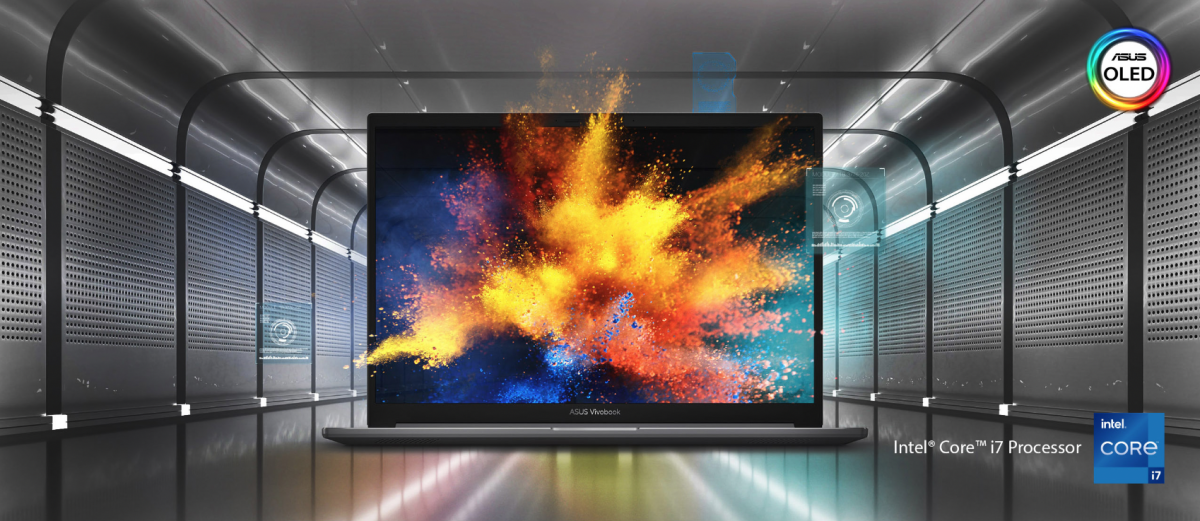

Technological advancement of OLED
Traditional non-OLED displays have various limitations that are difficult to eliminate even with innovation. Commonly used technologies such as TN, VA, and IPS all work with backlight in combination with a filter to generate colors and block light for contrast. However, in practice, we see that the filter is not always able to work optimally because the backlight must always be on to create an image. This is where OLED is different. OLED, which stands for Organic Light Emitting Diode, works without backlight and filter.
This technology is developed so that each pixel is its own light source that can independently display RGB. The advantage is that each pixel can precisely control its own colors and can be turned on or off. This results in progressive image quality with amazing colors and perfect contrast that cannot be matched by traditional display technologies.
Unmatched image quality
In TN, VA, and IPS panels, a filter converts white light into RGB colors. The quality and range of color reproduction are therefore very dependent on the quality of the filter used by the manufacturer. Often, the choice is between IPS (good colors, poor contrast), VA (good contrast, poor colors), or TN (cheap but lower image quality). When we look at OLED, there are no compromises to be made regarding image quality.
Because each pixel can control and manage RGB itself, it is possible to display perfect colors. Within the industry, this is measured by a standard called DCI-P3. An OLED screen is capable of displaying 100% of the shades within the DCI-P3 color spectrum. This ensures perfect color reproduction, which is highly appreciated by the most demanding users and creatives.
What often also has a significant influence on how colors are perceived is contrast. For traditional technologies, you can compare contrast to a lamp with a blanket over it. Regardless of the blanket, light still comes through the blanket. This principle also applies to TN, VA, and IPS panels. A filter can only block a portion of the light generated by the backlight. This means that black is never truly black but light or, in better cases, dark gray. This results in colors being perceived as less vibrant and accurate.
With OLED, each pixel can be turned on or off. In a 4K OLED screen, this means tens of millions of pixels can be individually turned off to generate infinite and perfect contrast. This leads to a more pleasant viewing experience and better color perception. Additionally, this deep contrast combined with progressive color reproduction provides an excellent HDR display in movies, games, and series.
Less strain on the eyes
In addition to the advantages in color reproduction and contrast, there are ergonomic improvements that OLED technology brings. Nowadays, it is well known that prolonged exposure to blue light causes eye fatigue. This is why many people use blue light filters on phones, monitors, and laptops. These filters create a yellowish glow over the screen, minimizing blue light. Unfortunately, this filter causes colors to be displayed incorrectly.
With OLED technology, a blue light filter like those used in other panel technologies is not necessary. The color frequency at which OLED generates blue light is at a frequency that is not harmful to the eyes. Therefore, a blue light filter is not needed, allowing colors to be displayed perfectly at all times without eye fatigue from blue light.
Great for work and entertainment
OLED is designed to enhance the overall laptop experience. It helps you work with less eye fatigue, better assess creations like videos and photos, and provides a sharp, color-accurate, and high-contrast image under all conditions. Additionally, the OLED screen also helps you relax after work by offering an immersive movie experience, allowing you to watch series in the best quality, and quickly jump into your favorite game for a session.
OLED laptops in the Dutch market
The availability of OLED laptops in the Benelux market is growing every year, providing a wide choice of OLED laptops in various configurations and price ranges. Until two years ago, OLED was a technology that only belonged to the most luxurious devices. Due to Asus's determination to make OLED available in laptops for the masses, there are now models in the entry-level price range that feature an OLED screen and thus all the benefits that come with it.
Whether you choose a trendy VivoBook, sleek and mobile ZenBook, or a creative powerhouse like the ProArt. Asus has the right OLED laptop for everyone.


